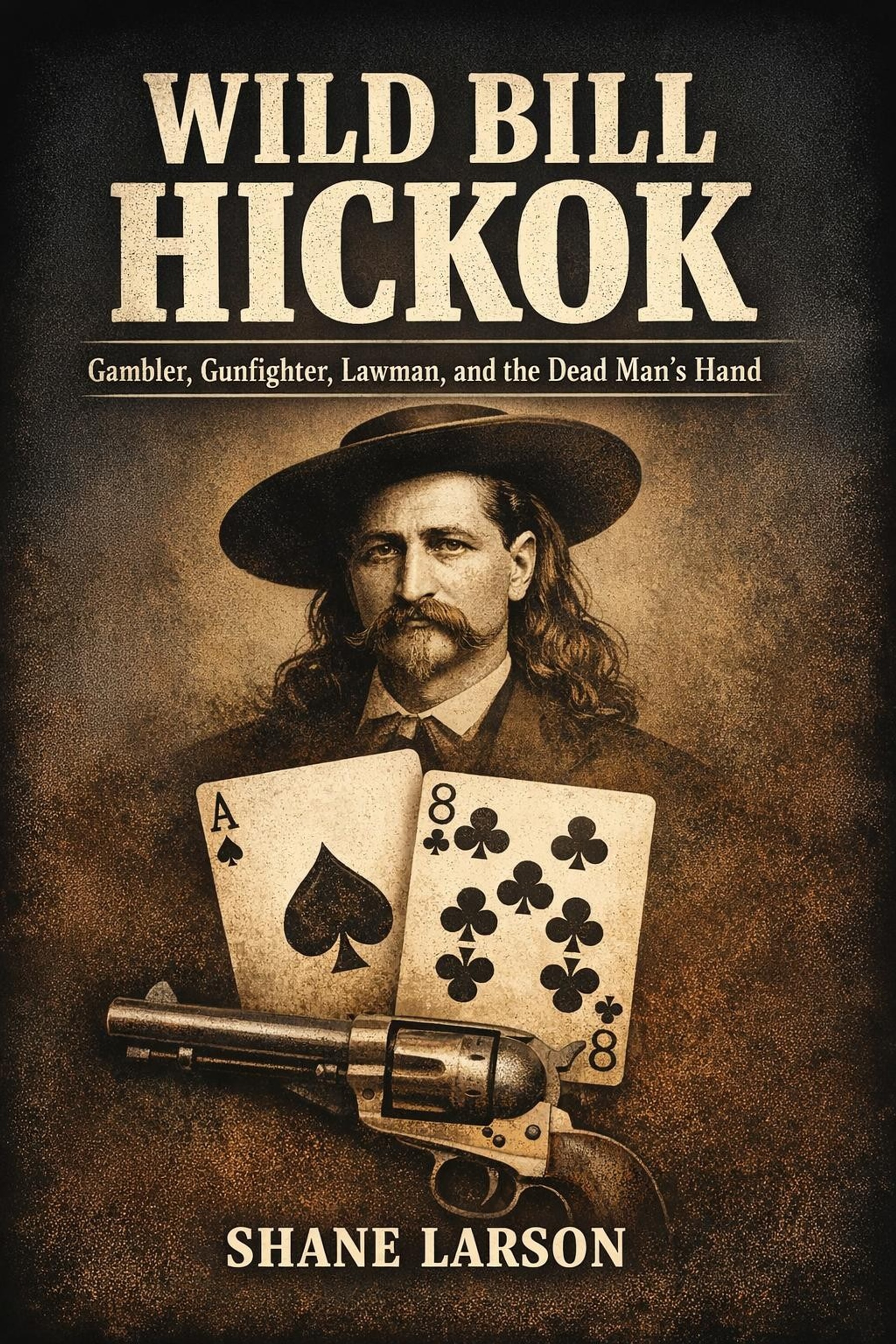
Wild Bill Hickok
Gambler, Gunfighter, Lawman, and the Dead Man's Hand
By Shane Larson · The Wild West Series (Book 33)
About This Book
The legend says Wild Bill Hickok killed hundreds of men. A widely repeated version put the number at over a hundred by the time he was thirty, each one a fair fight, each one deserved. The documented figure — the killings we can actually place with a name, a date, and a witness — is somewhere between six and ten, and several of those were murky, disputed, or arguably self-defense gone wrong. The gap between those two numbers is not a rounding error. It is the entire career of James Butler Hickok, because the gap is where the fame lived.
Hickok is often called the first celebrity gunfighter in American history, and the phrase is more literal than it sounds. He was a real and formidable frontiersman — a Free-State fighter in Bleeding Kansas, a Union scout and spy, a deputy U.S. marshal, and the lawman who kept order in the roughest Kansas cattle towns largely on the strength of his name. But in 1867 a writer for Harper's New Monthly Magazine took that competent scout, inflated him into a one-man army who had supposedly slain hundreds, and printed it for a national audience. The dime novels seized on the figure and ran. From that year forward, Hickok lived as two people at once: the man who had to eat, sleep, and survive, and the myth that walked ten feet ahead of him wherever he went.
This book is about what it costs to be your own legend while you're still alive to read it.
The Argument
The documented Hickok needs no inflation. Before the magazines found him, he had already lived through the guerrilla violence of the Kansas–Missouri border, scouted for the Union during the Civil War, and killed a man named Davis Tutt in the Springfield public square in 1865 — one of the very few genuine face-to-face, walk-and-draw duels the West ever actually produced, as opposed to the hundreds the movies later invented. That single, real event became the template for a thousand fictional ones.
Then came the fame, and the fame changed the physics of his life. In towns like Abilene, Hickok's reputation did more policing than his revolvers ever did; men who might have tested an ordinary marshal simply stayed in line rather than draw on "Wild Bill." But a reputation built on the threat of violence eventually has to be paid in the real thing. In Abilene in 1871 the bill came due: in a chaotic street confrontation, Hickok killed a man and, in the same volley, accidentally shot and killed his own deputy. He never wore a lawman's badge again. That night broke something in him, and the book treats it as the turning point it was.
What follows is a slow, human decline that the legend has no room for. His eyesight was failing — a catastrophe for a man whose survival depended on seeing a threat first. He gambled to keep himself in money and suffered through a humiliating stint as a stage actor, playing a cardboard version of himself, badly, for eastern crowds. And when the Black Hills gold rush opened, he took one last gamble on Deadwood and sat down at a card table with his back to the room. This book separates the documented gunfighter from the manufactured one, and argues that Hickok's real historical importance isn't his marksmanship — it's that he was the first American whose celebrity was mass-produced by the press, who then had to live and die inside it.
Why I Wrote This
I kept running into Hickok sideways — in a movie, in a poker reference, in the phrase "dead man's hand" — and realized I had absorbed the legend without ever once encountering the man. When I went looking for him, the thing that grabbed me wasn't the shooting. It was the vertigo of watching someone try to live a normal, difficult, failing human life while a fictional superman wearing his name toured the country in dime novels and, eventually, on stage next to him.
We think of manufactured celebrity as a modern disease — reality TV, tabloids, the internet. Hickok is proof it's older than any of that. A magazine writer in 1867 built a mass-market legend out of a real man, and the real man then had to spend the rest of his short life competing with it, and losing. That's the story I wanted to tell: not the gunfighter, but the first person the American press ever turned into a product and then abandoned.
Frequently Asked Questions
How many men did Wild Bill Hickok actually kill?
Far fewer than the legend claims. The documented, verifiable killings number in the single digits, and several of those were disputed or messy rather than the clean duels of the myth. The book walks through each one and is candid about where the sources are thin or contradictory.
Is this a gunfighter action story or a serious history?
It's a documented history that happens to move quickly. There's plenty of gunfire in the record, but the book is more interested in how the fame was built and what it did to the man than in glorifying the shootings, and it never invents scenes to fill gaps.
Does it cover Deadwood and Calamity Jane?
Yes. The Deadwood chapters cover the gold camp, the card game, Calamity Jane's real (and much-embroidered) connection to Hickok, and the two separate trials of his killer, Jack McCall. If you came from the HBO series, this is the documented version of that world.
Do I need to read the other Wild West books first?
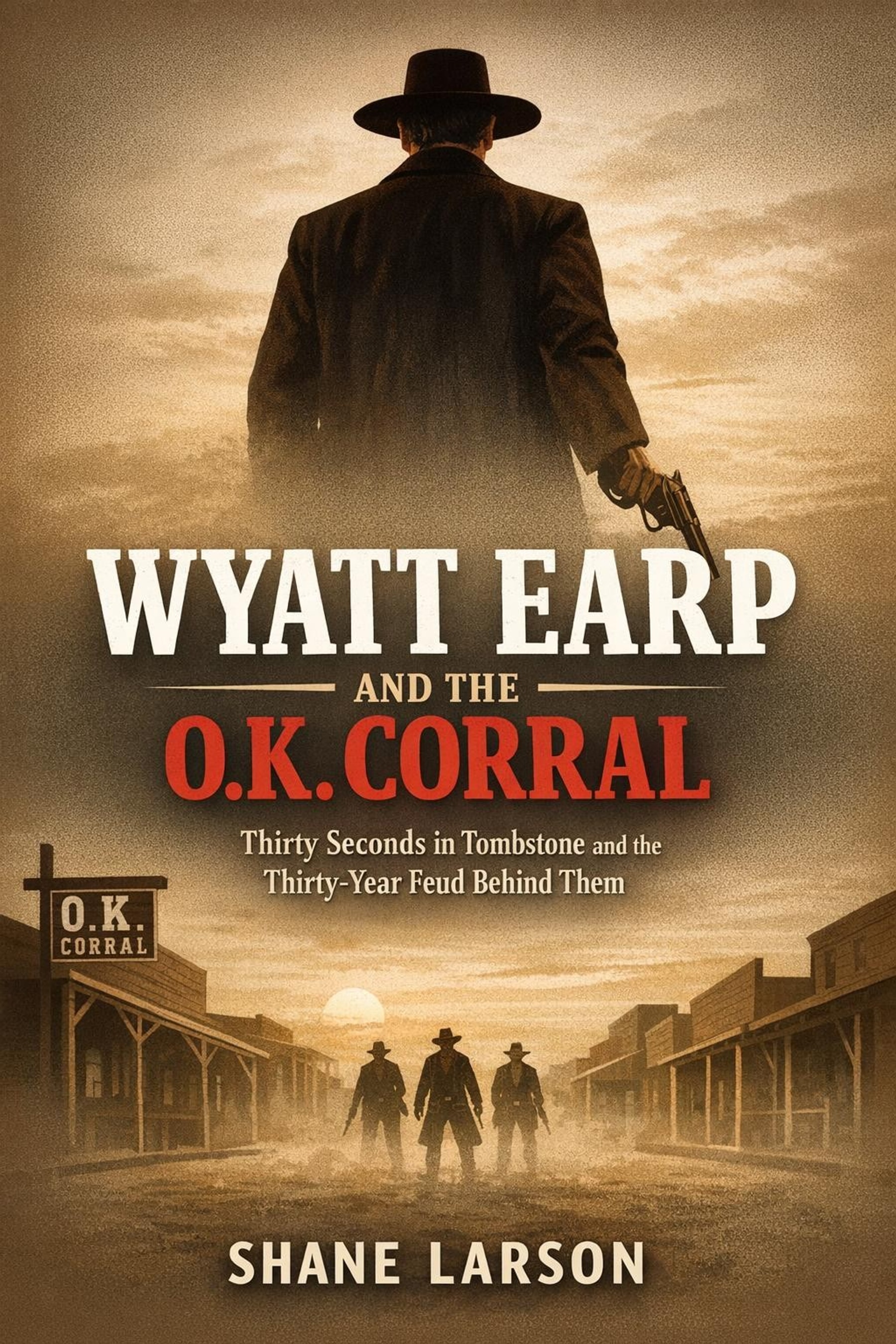
No. This is part of The Wild West series, and each title stands on its own. It sits especially close to Wyatt Earp & the O.K. Corral — another study of a real lawman buried under a manufactured legend — but you can read them in any order.
What makes this different from the movies and older biographies?
It refuses to recycle the legend as fact. Where older popular accounts pass along the inflated kill counts and the heroic duels, this book treats the 1867 magazine invention as its central subject and keeps the documented record and the manufactured myth clearly separated the whole way through.
If You Liked This, You Might Like
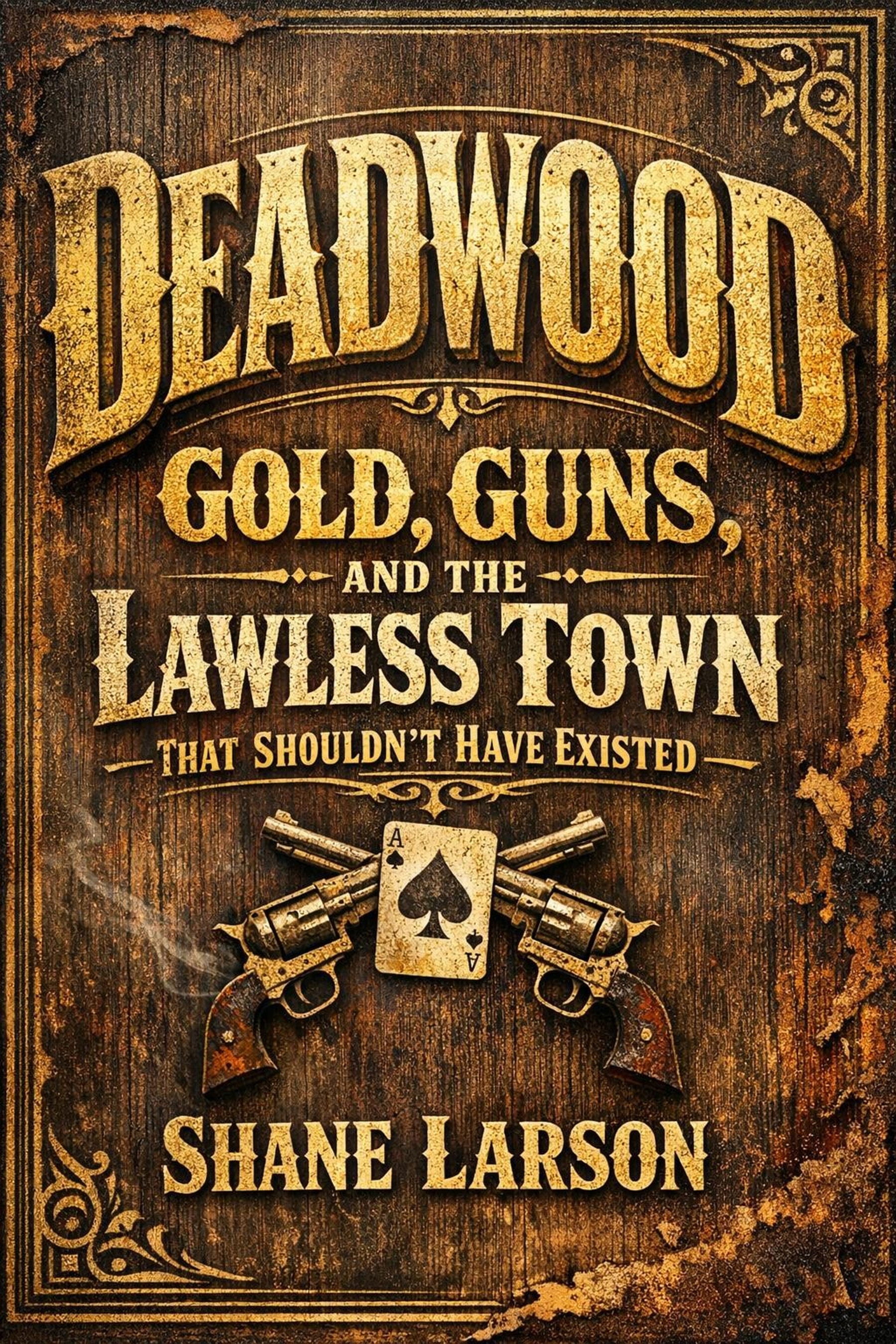
- Deadwood — the lawless Black Hills gold camp where Hickok spent his last weeks and died, told as the story of the town itself and the improvised justice that hanged, then re-tried, his killer.
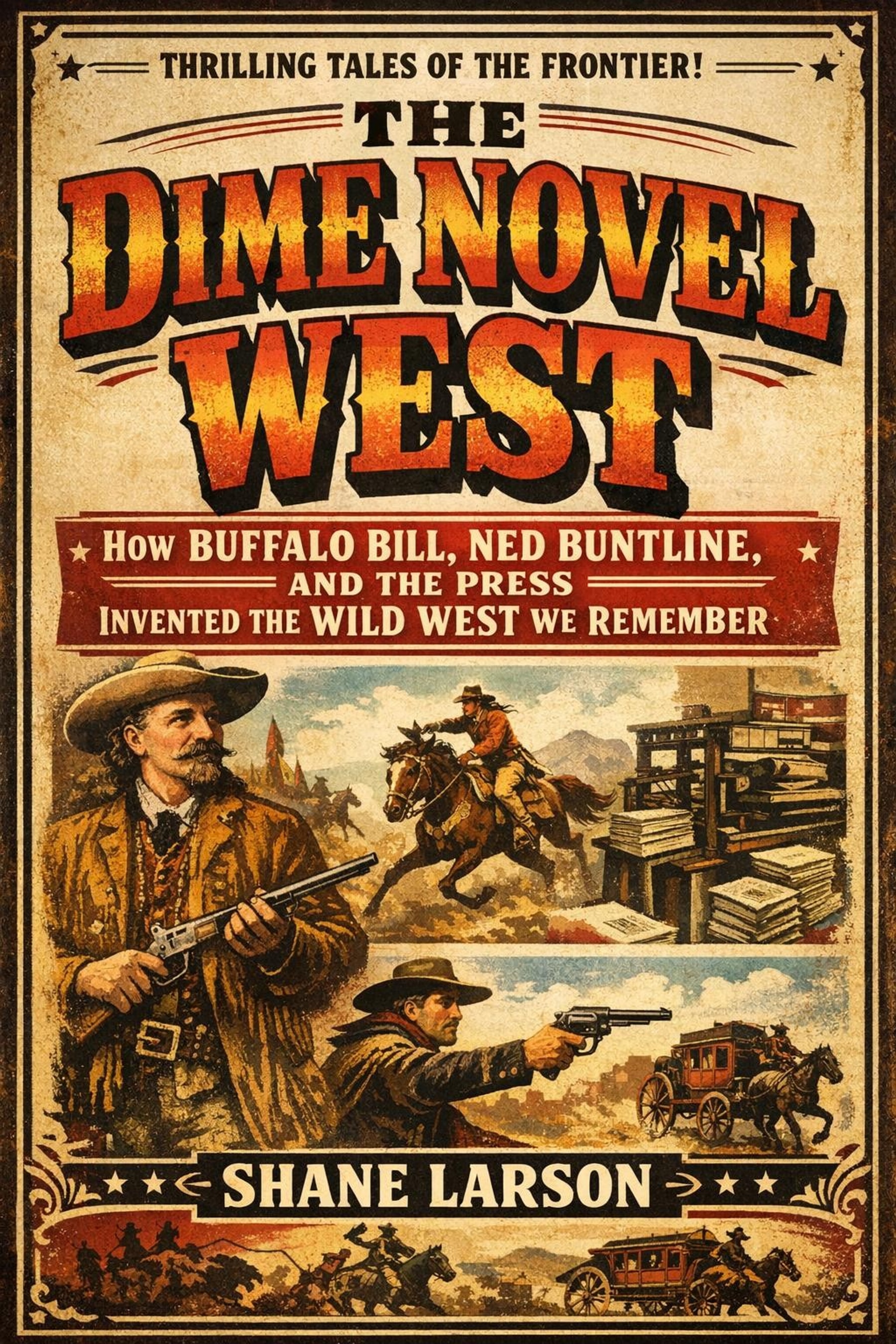
- The Dime Novel West — the full machinery of the legend factory that first mass-produced "Wild Bill," from Ned Buntline and the penny press to Buffalo Bill's traveling arena.
- Digital Outlaws: The Rise of Early Hackers — the identical pattern a century later, as the press once again spins outlaws into celebrities and sells the manufactured version back to the public.
The West's most famous hand of cards is real. Almost everything most people believe about the man holding it is not — and the documented life turns out to be the better story.
Part of The Wild West series from Peak Grizzly Publishing.
What You'll Learn
- **The Davis Tutt duel** in the Springfield square — reconstructed from the record as one of the only true face-to-face draws in the entire history of the West, and the moment that seeded the whole gunfighter genre.
- **The 1867 *Harper's* article** and exactly how it converted a disputed, ambiguous shooting into the birth of "Wild Bill," kill count and all.
- **Rock Creek Station**, the murky early killing that the myth-makers later rewrote into a heroic massacre of a "gang."
- **The Abilene tragedy of 1871** — the night Hickok shot a man and killed his own deputy by accident, and hung up his badge for good.
- **The failing eyesight** that quietly doomed a man whose life depended on his vision, and how he tried to hide it.
- **The humiliating theatrical tour**, in which the real Hickok played a fake Hickok for money in front of paying crowds back East.
- **Deadwood, the card table, and the two trials of Jack McCall** — including the frontier "court" that acquitted a confessed murderer, and the real court that later hanged him.
- **Calamity Jane, the gold camp, and the myth-making that started before the body was cold** — how the "dead man's hand" became legend within a generation.
New Wild West / American Frontier History releases and free chapters — no spam, unsubscribe anytime.
More in The Wild West Series
View series →