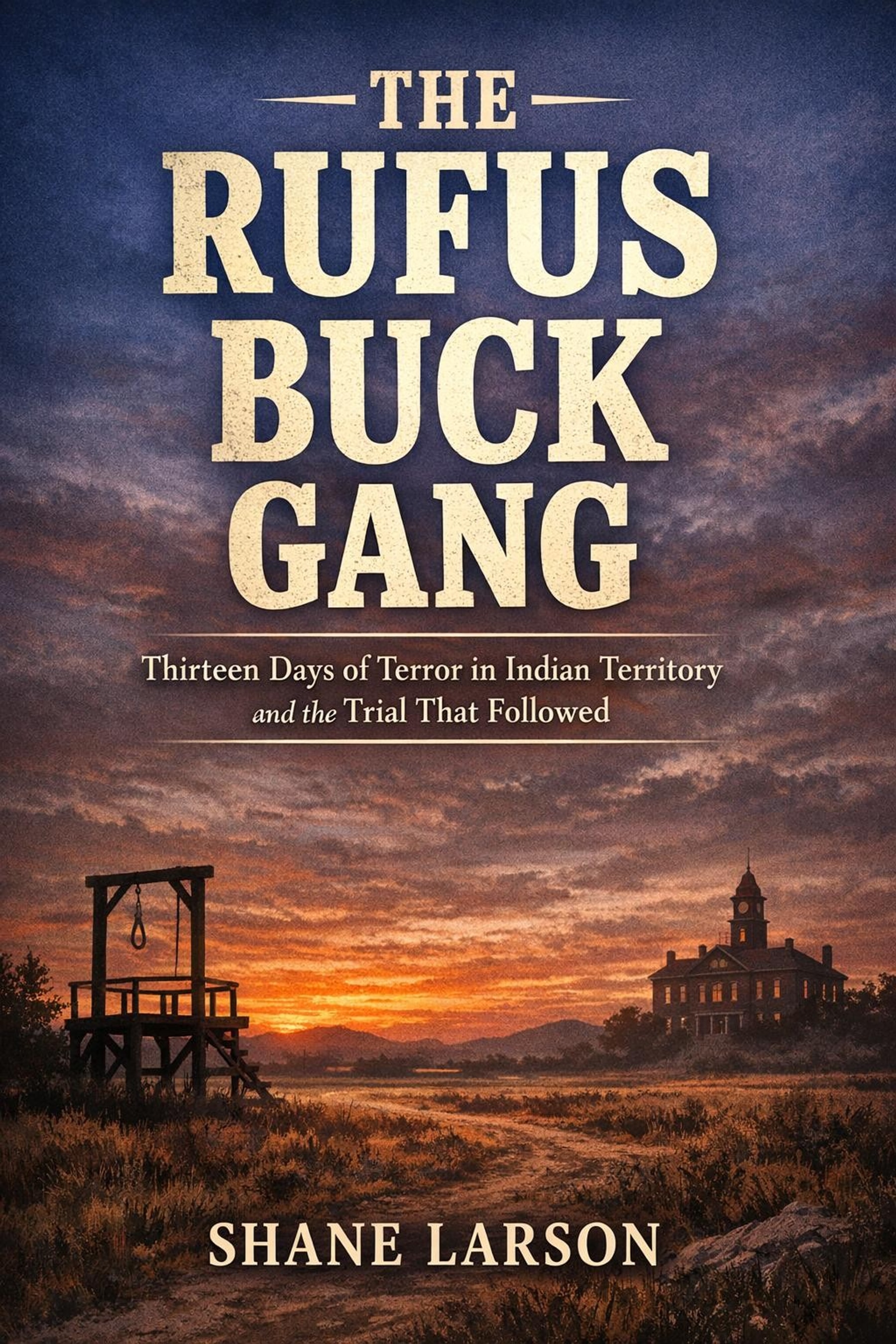
The Rufus Buck Gang
Thirteen Days of Terror in Indian Territory and the Trial That Followed
By Shane Larson · The Wild West Series (Book 31)
About This Book
On the back of a photograph in a Fort Smith jail cell, a teenager wrote a poem. The spelling is broken, the theology homemade, the sentiment aimed at his mother and at heaven. It was found after they hanged him, and it has confused everyone who has read it since — because it does not sound like the man the newspapers had described for a year. Rufus Buck was, by the record of that summer, a robber, a murderer, and a rapist who had terrorized a stretch of Indian Territory for thirteen days. He was also, on the evidence of that scrap of paper, a frightened boy who believed he was going to see his mother again. The gap between those two things is why this story refuses to resolve into anything comfortable.
In the summer of 1895, the world Buck was born into was disappearing beneath him. Indian Territory — the last self-governed ground of the Creek, Cherokee, and the other tribes moved west decades earlier — was being dismantled by railroad, by white settlement, and by a federal allotment policy engineered to break tribal landholding apart. Into that dissolving order rode five young men of mixed Creek and Black descent, led by a nineteen-year-old, and for not quite two weeks they did as much damage as they could.
Then it stopped, as suddenly as it began, and the machinery of the West's most feared court closed around them.
The Story
The gang's spree was short and brutal. They killed a deputy U.S. marshal. They robbed stores, ranches, and travelers across the Creek and Cherokee country. And they committed assaults against women that this book neither omits nor exploits — the victims kept at the center, named where the record allows and treated as people rather than plot. The thirteen days are reconstructed from court files and period newspapers, in sequence, without the embellishment later retellings layered on.
The pursuit was fast. Creek Lighthorse police — the Nation's own officers — and deputy marshals out of Fort Smith ran the five to ground and delivered them to Judge Isaac Parker, the "Hanging Judge," in the last stretch of a career being stripped away by a Congress determined to curb his court. The trial moved quickly and the outcome was never in doubt. On July 1, 1896, all five went to the gallows together in one of the largest mass executions the court ever carried out.
What none of that settles is what the thirteen days meant. Some accounts have Buck talking about driving out the white man and restoring the old order, which would make the spree a doomed, incoherent rebellion against the erasure of the Territory. Others see nothing but a teenage crime wave that spun out of control. The sources genuinely do not decide it, and this book will not pretend they do. Freedom fighter and monster are both too clean; the harder truth lives in the space between them, inside the collapse of a whole way of life.
That collapse is the real subject. The gang is inseparable from the dispossession that produced it — a generation of Creek, Cherokee, and Black freedmen watching their legal ground vanish under them, some with very little left to lose. The book sets the rampage inside that larger tragedy without letting it become an excuse, because the people the gang hurt were part of that same dying world.
Why I Wrote This
Most of what is written about the Rufus Buck gang picks a side in the first paragraph. He is either a proto-revolutionary striking back at a system that was destroying his people, or he is a simple monster, and whichever version you're reading tells you almost nothing about the other. Both flatten something that I don't think can honestly be flattened.
I wanted to sit inside the ambiguity instead of resolving it. The facts of what the gang did are terrible and not in dispute; the meaning of what they did is genuinely unknowable, and pretending otherwise does a disservice to everyone involved — the victims most of all. Writing it, I kept coming back to that poem in the cell, because it refuses to fit either story. This is a book about a crime, but also about a place and a people at the moment the ground gave way beneath them, and I didn't want to lose the second thing in telling the first.
Frequently Asked Questions
Does the book graphically depict the sexual violence?
No. The assaults are part of the record and the book neither pretends they didn't happen nor minimizes their gravity, but it handles them soberly and without graphic detail. The victims are treated as people owed dignity, not as material for shock. The intent throughout is documentary, not lurid.
Is Rufus Buck portrayed as a hero or a villain?
Neither, deliberately. The book lays out the case that he may have understood the spree in political terms and the equally supported case that it was a crime wave with no coherent aim, and refuses to choose for the reader. The sources don't allow a clean verdict, and forcing one distorts the history.
Do I need to read Judge Isaac Parker or Bass Reeves first?
No. This book stands entirely on its own. It sits in the same world as those two — Parker's Fort Smith court tries the case, and the Indian Territory lawmen Bass Reeves belonged to are the men who ran the gang down — so reading them alongside deepens the picture without being required.
How much of the story is documented versus legend?
The core events — the killings, the robberies, the capture, the trial, the execution — are well supported by court records and period newspapers. Buck's motives are where the ground gets soft, and the book is explicit about that line. The jailhouse poem is real and survives; what it means is left to the reader.
Where does this fit in the history of Indian Territory?
Near the end of it. The spree and the trial fall in the last years before Oklahoma statehood dissolved the Territory, and the book frames the whole episode as part of that closing — the violence of an order already being taken apart by policy and time.
If You Liked This, You Might Like
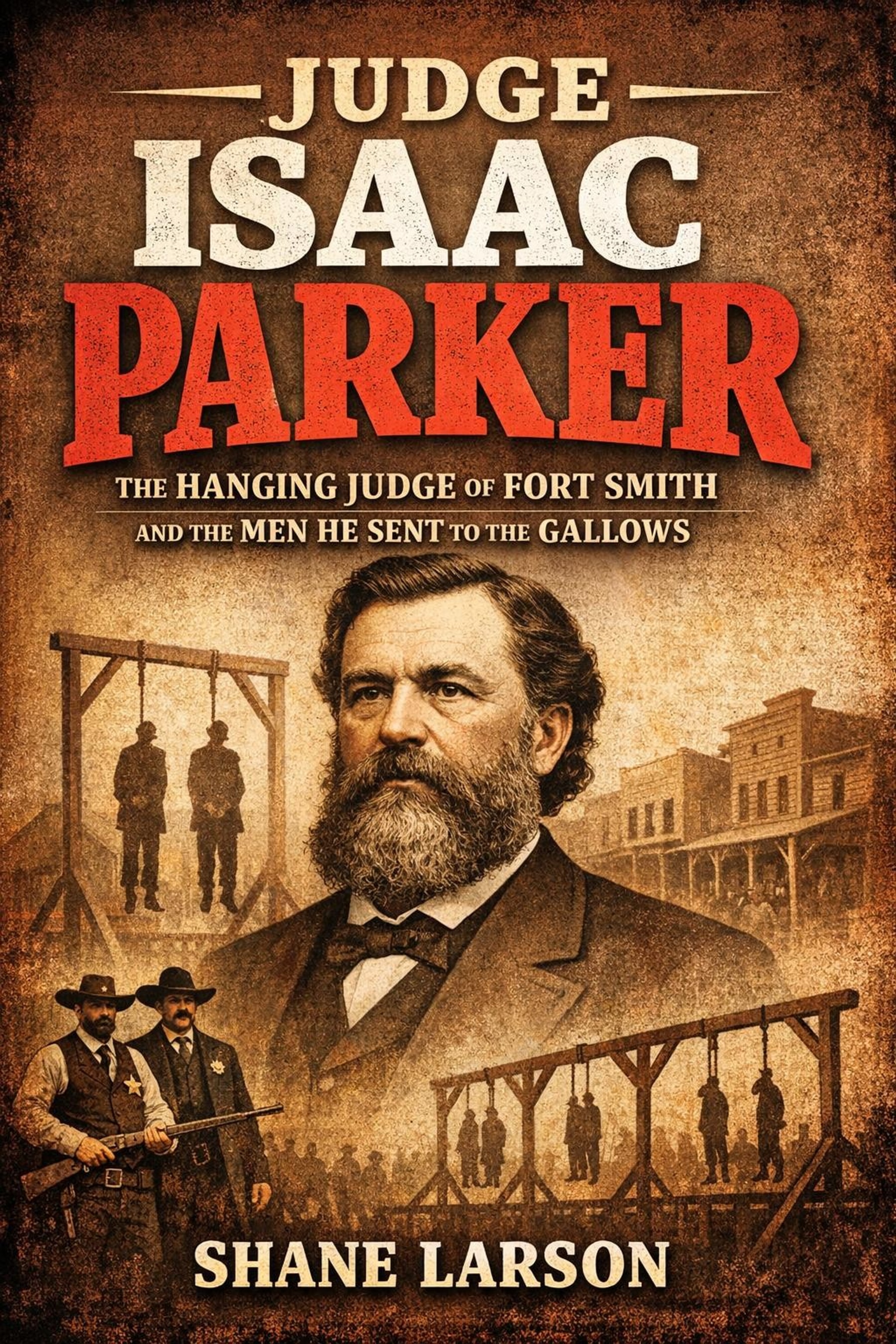
- Judge Isaac Parker — the "Hanging Judge" who sentenced the gang, seen across the full arc of the Fort Smith court whose power was draining away exactly as this case came before it.
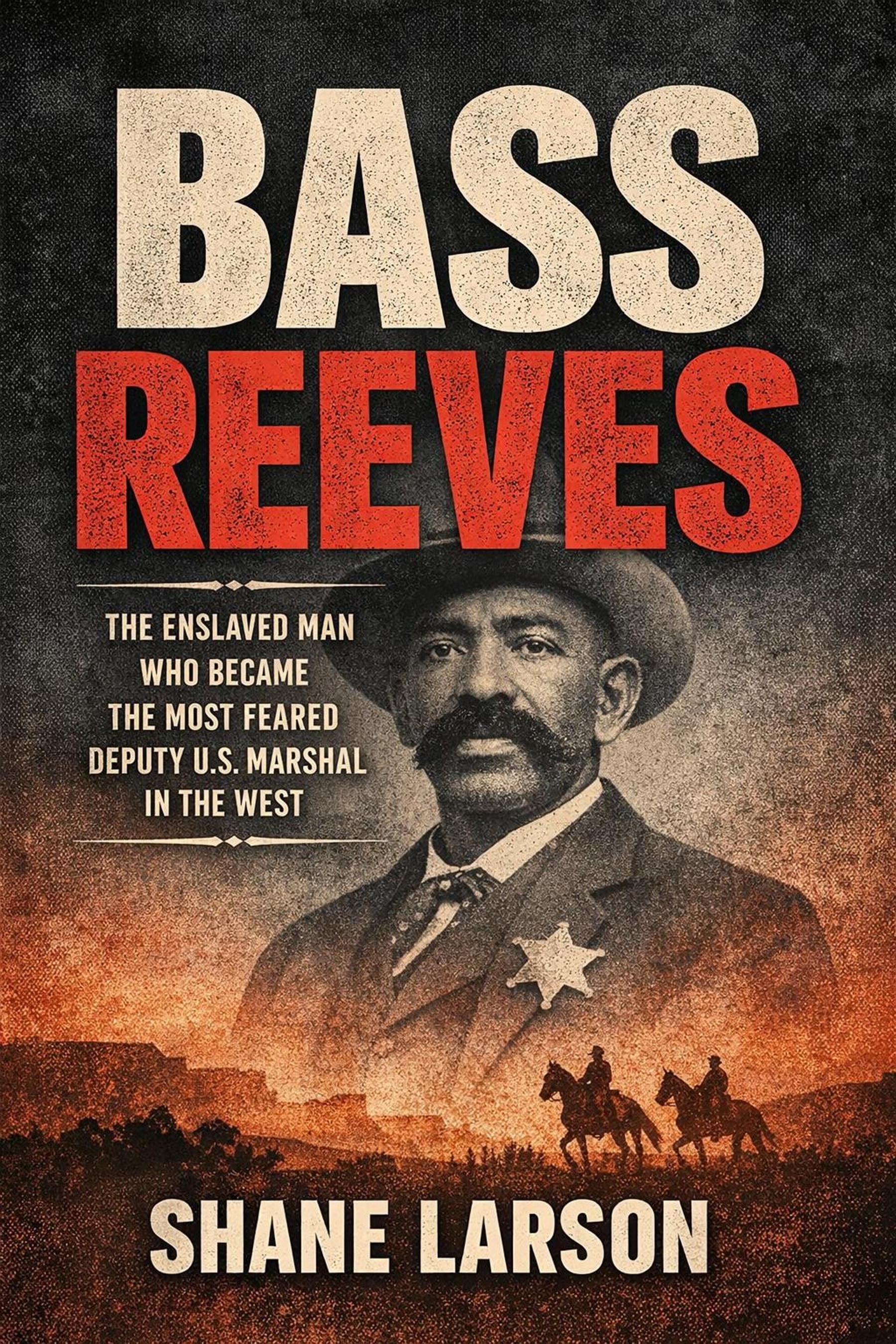
- Bass Reeves — the Indian Territory the gang terrorized, told from the side of the deputy marshals who policed it, and one of the most formidable of them.
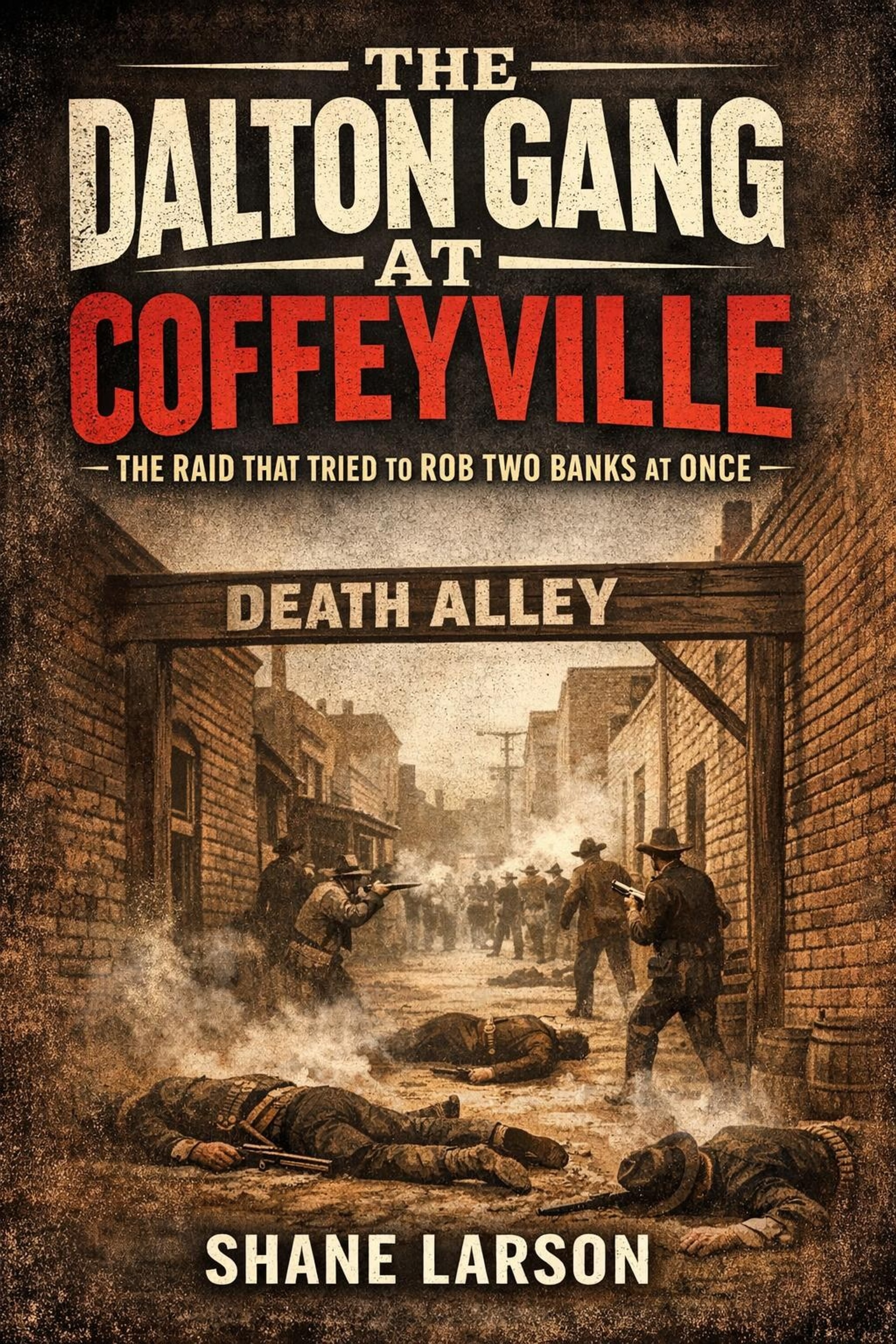
- The Dalton Gang at Coffeyville — another young gang that came apart fast and violently in the same Territory and the same closing years of the frontier.
The Rufus Buck story offers no clear answer, and this account does not manufacture one. It stays with the record, keeps the victims in view, and lets a hard case stay hard.
Part of the Wild West series.
What You'll Learn
- The thirteen-day timeline rebuilt from court records and contemporary newspapers, laid out in order so the spree reads as documented history rather than folklore.
- Who Rufus Buck actually was — his mixed Creek and Black ancestry, the world of the Five Tribes he came out of, and the long shadow slavery and its aftermath cast across it.
- Allotment and dispossession — how federal policy set out to dissolve tribal land and, in doing so, produced a generation with the ground pulled out from under it, while keeping the people the gang harmed at the center rather than turning their suffering into spectacle.
- The manhunt that ended the rampage, with the Creek Lighthorse and the Fort Smith marshals given their due as the men who stopped it.
- Judge Parker's court in its final phase, trying the case even as Congress carved away the jurisdiction that made the "Hanging Judge" a legend.
- The mass hanging of July 1, 1896, and the strange, devout jailhouse poem Buck left behind — the detail that keeps the story from settling into a simple shape.
- The unresolved question stated plainly and left open: teenage rampage, doomed rebellion, or something the categories can't hold.
New Wild West / American Frontier History releases and free chapters — no spam, unsubscribe anytime.
More in The Wild West Series
View series →

More in This Genre
View all →