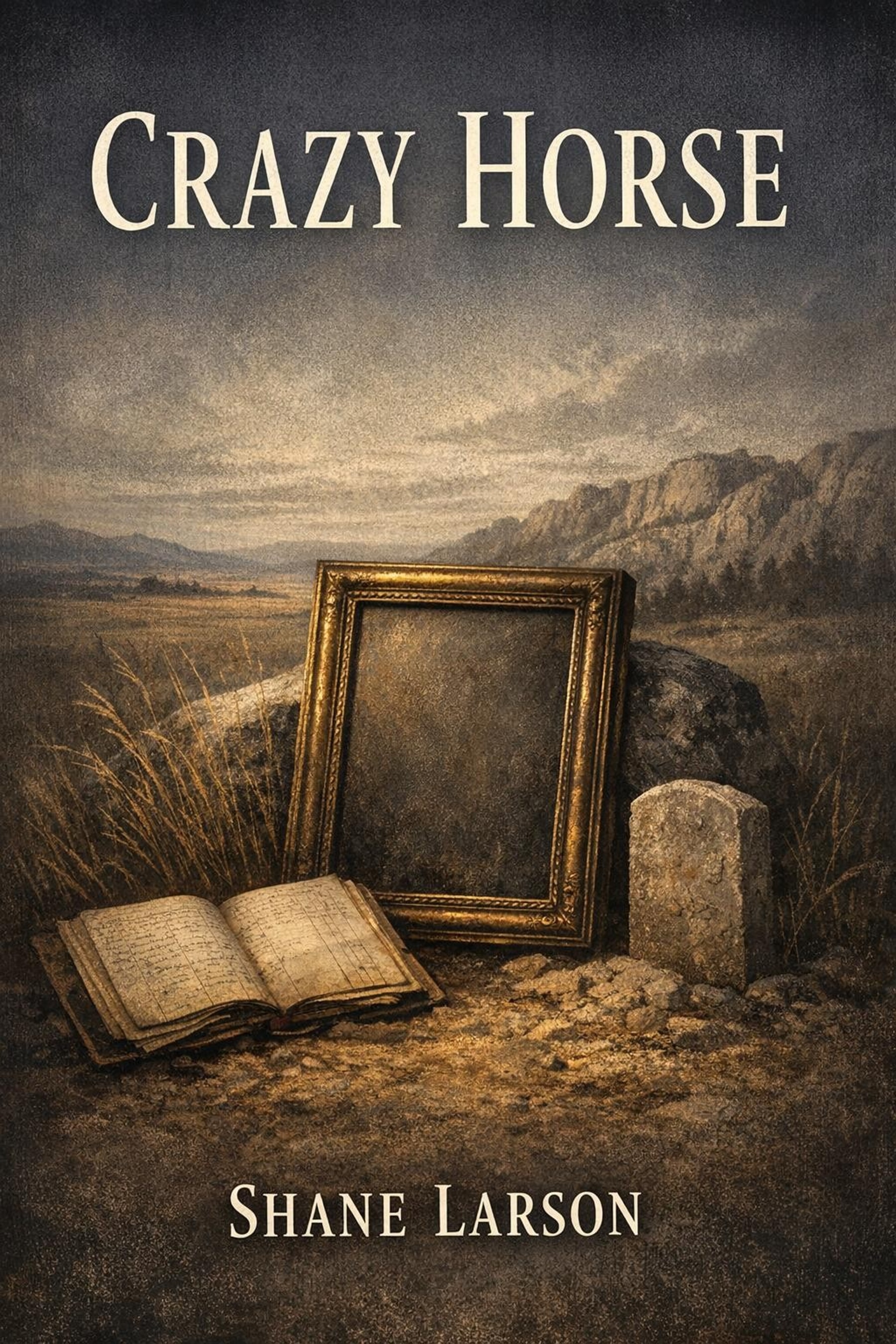
Crazy Horse
The Man Who Left No Picture
By Shane Larson · The Wild West Series (Book 29)
About This Book
On the evening of September 5, 1877, soldiers at Camp Robinson, Nebraska, walked a Lakota man of about thirty-seven across the parade ground toward a low log building. He had come in voluntarily, expecting a talk with the commanding officer. At the doorway he saw the barred windows and the men in leg irons, and understood. What happened in the next few seconds was watched by dozens of people, and no two of them told the same story. By midnight he was dead of a single deep wound, and by morning the army had a problem it has never stopped having: the most famous warrior of the plains wars had been killed in its custody, and nobody could establish exactly how.
The man who died that night had spent his adult life declining to be recorded. He never sat for a camera, though photographers offered to pay him. He put his mark on no paper until his final months, gave no interviews, dictated nothing, and was never sketched from life. His parents carried the body away and buried it in a place they never named, and the secret held. He is the least documented major figure of the Indian Wars — and the most vividly imagined. Those two facts are not a coincidence: the legend grew as large as it did precisely because there was so little on record to contradict it.
The Story
A boy was born among the Oglala Lakota about 1840 — the year is a range, not a date — with hair light enough that other children called him Curly. He grew into a fighter his own people described as strange: quiet, plainly dressed, a poor talker in council, indifferent to the honors other warriors lived for. The name he carried into history was his father's, formally transferred to him after his early raids: Tasunke Witko, rendered in English as Crazy Horse.
His fighting record is attested by both sides. He rode with the decoys at the Fetterman fight in December 1866, where eighty-one soldiers were drawn over a ridge and killed inside an hour. In June 1876 his counterattack on the Rosebud fought General Crook's column to a standstill and took it out of the converging campaign eight days before the Little Bighorn. At the Greasy Grass itself, Lakota and Cheyenne testimony places him in the fighting that finished Custer's battalion. Between the wars sits the episode his own people remembered with discomfort: chosen as a shirt wearer — one of the men charged with restraint and good order — he ran off with another man's wife, took a pistol ball in the face from her husband, No Water, and lost the shirt. The scar stayed with him for life.
The winter after the Little Bighorn broke the northern bands through cold, hunger, and burned villages, and in May 1877 he led nine hundred people in to Camp Robinson and surrendered, the column singing as it came. What followed were four months in an environment he had no aptitude for: rival leaders guarding their standing, officers competing to make use of him, informants paid in rations, and interpreters whose renderings nobody could check. In September a council answer of his passed through an interpreter and emerged as a vow to fight until not a white man was left alive. The correction never caught the rumor. An arrest order followed, and then the guardhouse door.
What's Inside
- Every image ever claimed to be Crazy Horse, examined one at a time, and why each collapses — the subject is someone else, the date is impossible, or the identification was added generations later.
- The vision quest treated as evidence rather than mysticism, with the chain of transmission through which the account reached print.
- The military record from the Bozeman Trail to the Greasy Grass, with what is documented separated cleanly from what has merely been assigned to him.
- The shirt-wearer scandal — the affair, the shooting, the scar — and what it shows about Lakota law reaching a man who was already famous.
- The agency system that killed him, reconstructed as a system: the jealousies that formed within weeks of his surrender, and a mistranslation that moved faster than any correction could.
- All six surviving eyewitness accounts of his death, staged side by side — where they agree, where they cannot be reconciled, and what the exercise teaches about how historical fact gets assembled.
- The afterlife: a novelist's inventions hardened into citations, recurring fake photographs, quotations found in no source, and a mountain carved into a face nobody ever saw.
Why I Wrote This
The Wild West series is more than twenty books old now, and every one of them runs on the same operation: put the documented record on one side of the table, put the legend on the other, and be honest about which is which. Crazy Horse is the hardest test that method will ever face. Almost nothing about him was recorded, and almost everything about him has been asserted. Writing this book meant sitting with sentences I could not finish — no photograph to describe, no speech to quote, no grave to visit — and discovering how often the truthful answer was simply "we do not know." The uncomfortable part was how much better the book got each time I wrote that instead of reaching for something more satisfying. A life with holes in it turned out to be more interesting than any of the confident versions, because the holes are where he actually lived.
Frequently Asked Questions
Is there really no photograph of Crazy Horse?
Really none. Claimed photographs surface every few years, but none has ever been authenticated, and the people who knew him agreed he refused to sit for one. Chapter 1 takes the best-known claims apart individually.
How did Crazy Horse die?
He was fatally wounded at Camp Robinson, Nebraska, on September 5, 1877, during an attempt to put him in the guardhouse, and died late that night, aged about thirty-seven — held from behind by another Lakota man as the wound was struck. Whether it came from a guard's bayonet or from the struggle itself is a question the six surviving accounts cannot settle.
Where is Crazy Horse buried?
Nobody knows. His parents buried the body in secret, and though candidate sites have been proposed for nearly a century and a half, none has been confirmed. The concealment was deliberate, and it worked.
Did Crazy Horse really say "today is a good day to die"?
There is no evidence that he did. The line has been attached to several Lakota figures, and no account from anyone who rode with him puts it in his mouth. The Lakota expression it descends from is a statement of readiness rather than the fatalist battle cry English made of it. Appendix B traces the famous quotations to their actual first appearances in print.
Is the Crazy Horse Memorial an accurate likeness?
It cannot be: no authenticated image of him exists, so the face emerging from the mountain is a composed face, not a copied one. The book covers the carving's origin and scale, and the unresolved disagreement among Lakota people about whether it should exist at all.
Do I need to read the other Wild West books first?
No. It stands alone. Readers of the series' Little Bighorn volume will recognize the 1876 campaign from the other side of the river, but nothing here assumes it.
If You Liked This, You Might Like
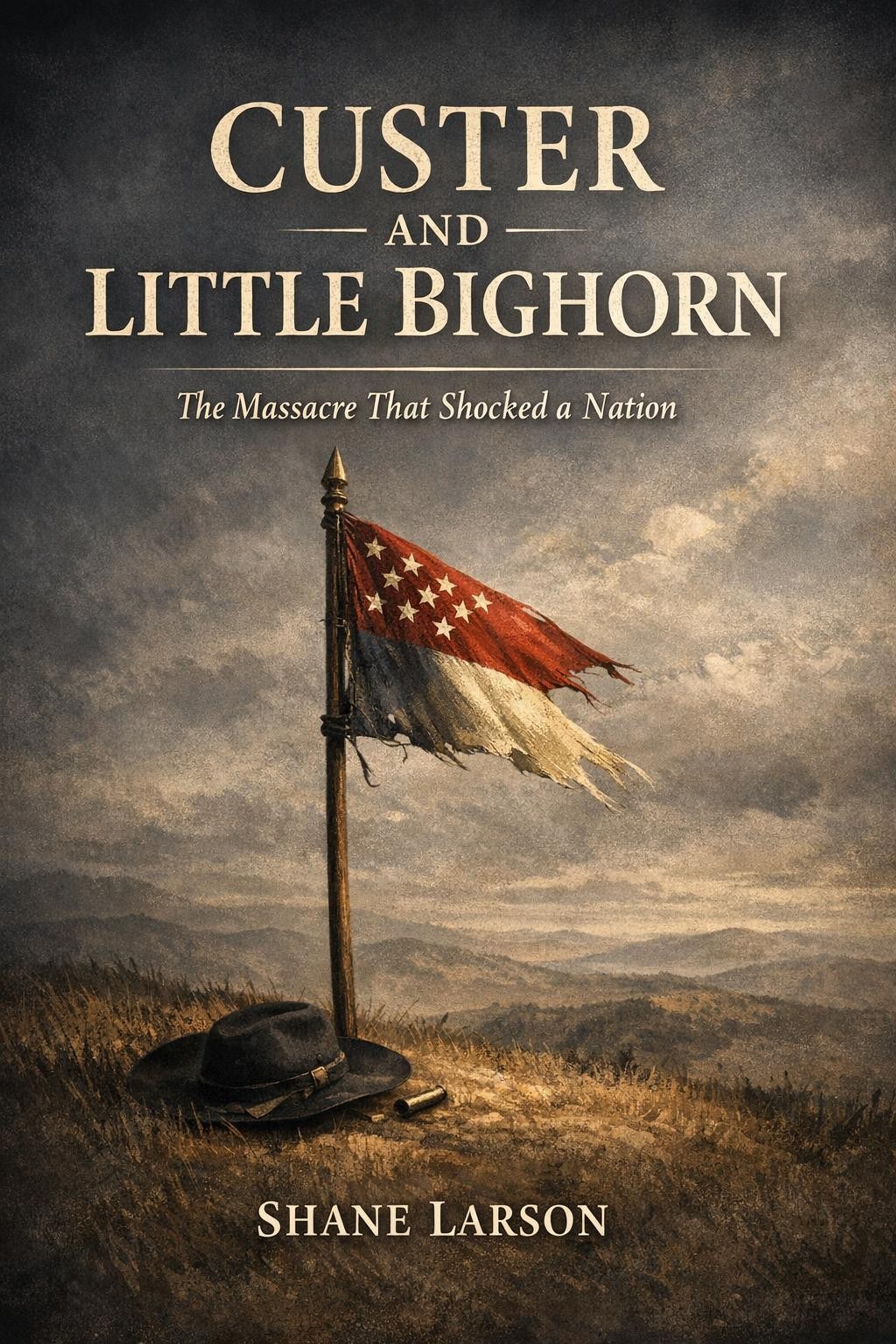
- Custer and Little Bighorn — the same June days of 1876 told from the army's side of the river; the two books answer each other directly.
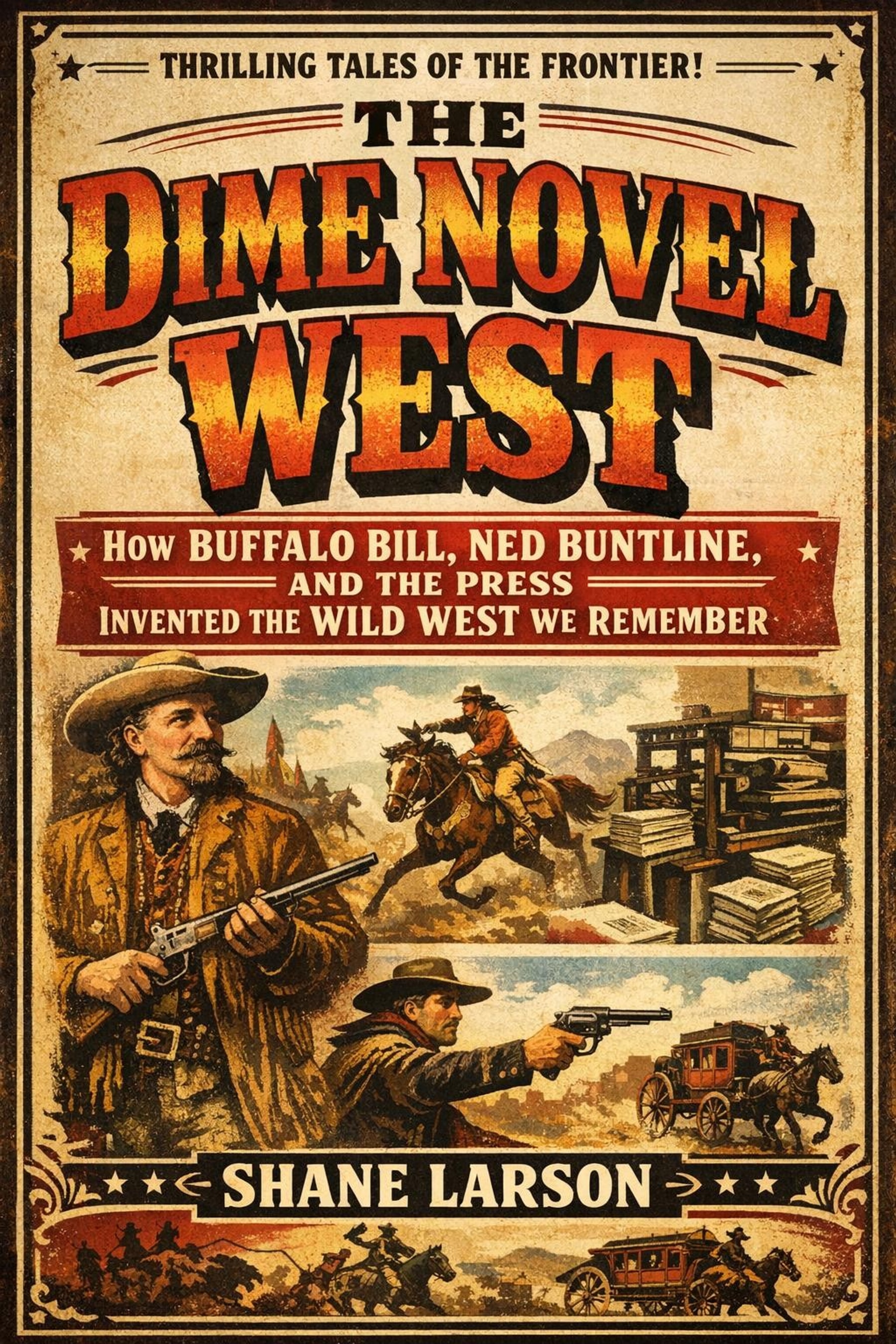
- The Dime Novel West — how the frontier was turned into a story while it was still happening: the publishing machinery behind exactly the kind of myth-making this book untangles.
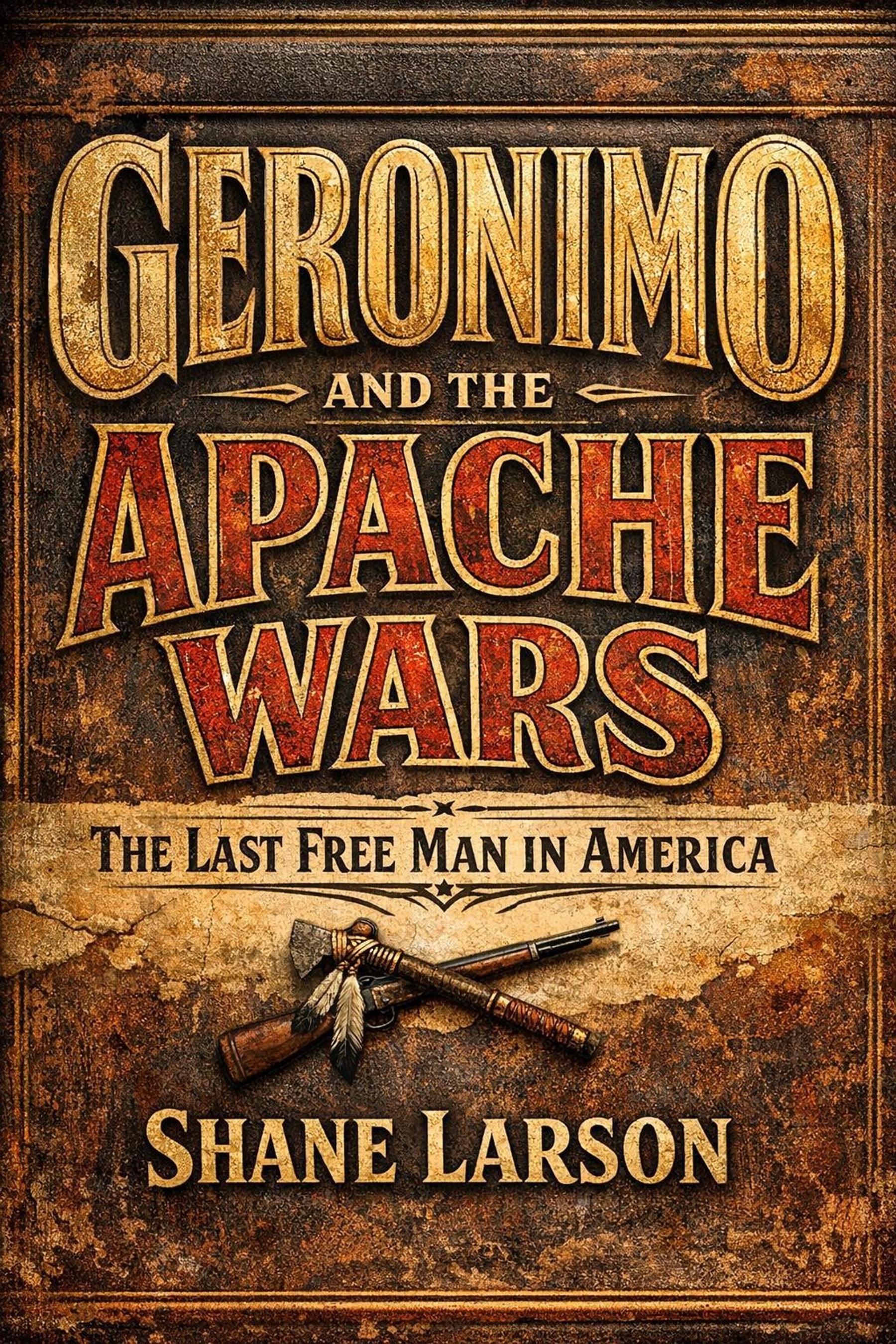
- Geronimo and the Apache Wars — the same collision between a free people and an industrial army, played out in the Southwest a decade later.
- Rapa Nui — a different hemisphere, the same discipline: what the evidence actually supports once the confident story everyone knows is stripped away.
He kept himself out of every record he could, and what survived is still enough — enough to establish a life, and enough to watch what other people built where the rest should be. This book holds the two apart.
Part of The Wild West series of frontier histories by Shane Larson.
What You'll Learn
- Every image ever claimed to be Crazy Horse, examined one at a time, and why each collapses — wrong subject, impossible date, or an identification added generations later.
- The vision quest treated as evidence rather than mysticism, with the chain of transmission through which the account reached print.
- The military record from the Bozeman Trail to the Greasy Grass, with what is documented separated cleanly from what has merely been assigned to him.
- The shirt-wearer scandal — the affair, the shooting, the scar — and what it shows about Lakota law reaching a man who was already famous.
- The agency system that killed him, reconstructed as a system: the jealousies that formed within weeks of his surrender, and a mistranslation that moved faster than any correction could.
- All six surviving eyewitness accounts of his death, staged side by side — where they agree, where they cannot be reconciled, and what that teaches about how historical fact gets assembled.
- The afterlife: a novelist's inventions hardened into citations, recurring fake photographs, quotations found in no source, and a mountain carved into a face nobody ever saw.
Included with Kindle Unlimited — read it free if you're a member.
New Wild West / American Frontier History releases and free chapters — no spam, unsubscribe anytime.
More in The Wild West Series
View series →